Soundtrack: CKJM community radio.
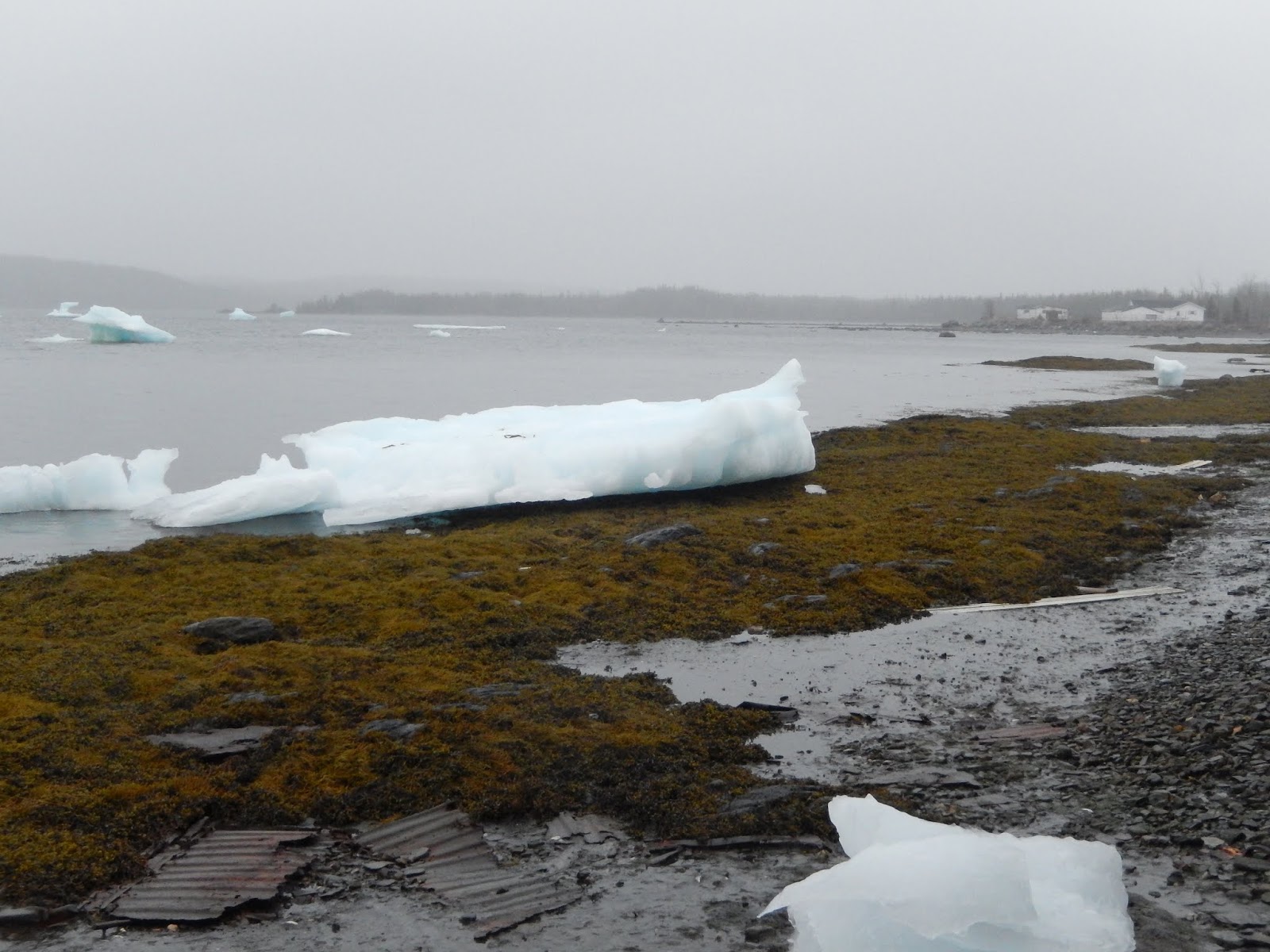
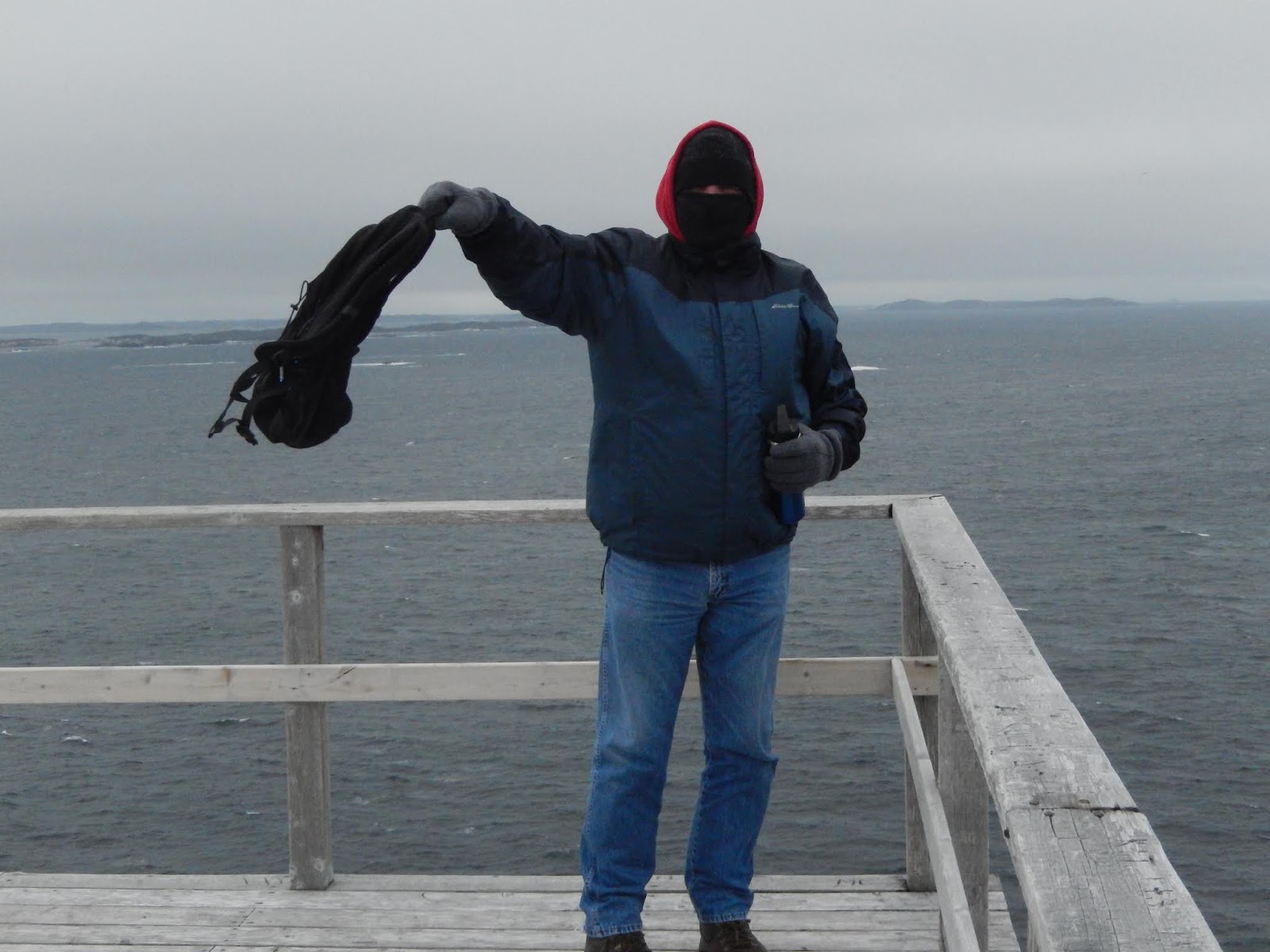
On a hunch that a good picnic spot would be near, my husband pulled our rental car off the side of the dead-ending, dirt road and parked. We were in White Point, Nova Scotia, a fishing village consisting of (so far as we could see) a dozen or so houses within walking distance of a small, snug harbor that hosted a handful of boats bobbing in the tide. While not quite the most northern town of Nova Scotia's Cape Breton Island - that'd be Meat Cove - White Point is a close second, sticking out on a slim promontory just outside the Cape Breton Highlands National Park. The namesake point juts north towards Newfoundland with the open Atlantic beyond. Probably why the wind came headlong towards us at gale force, barely slowed by "The Rock" (as Newfoundland is nicknamed) and cooled by passing over Greenland and the Arctic itself. Although nearly June, it was still just 45 degrees out, but under brilliant sunny skies - it hardly felt below 49. Oh, but then minus the windchill.
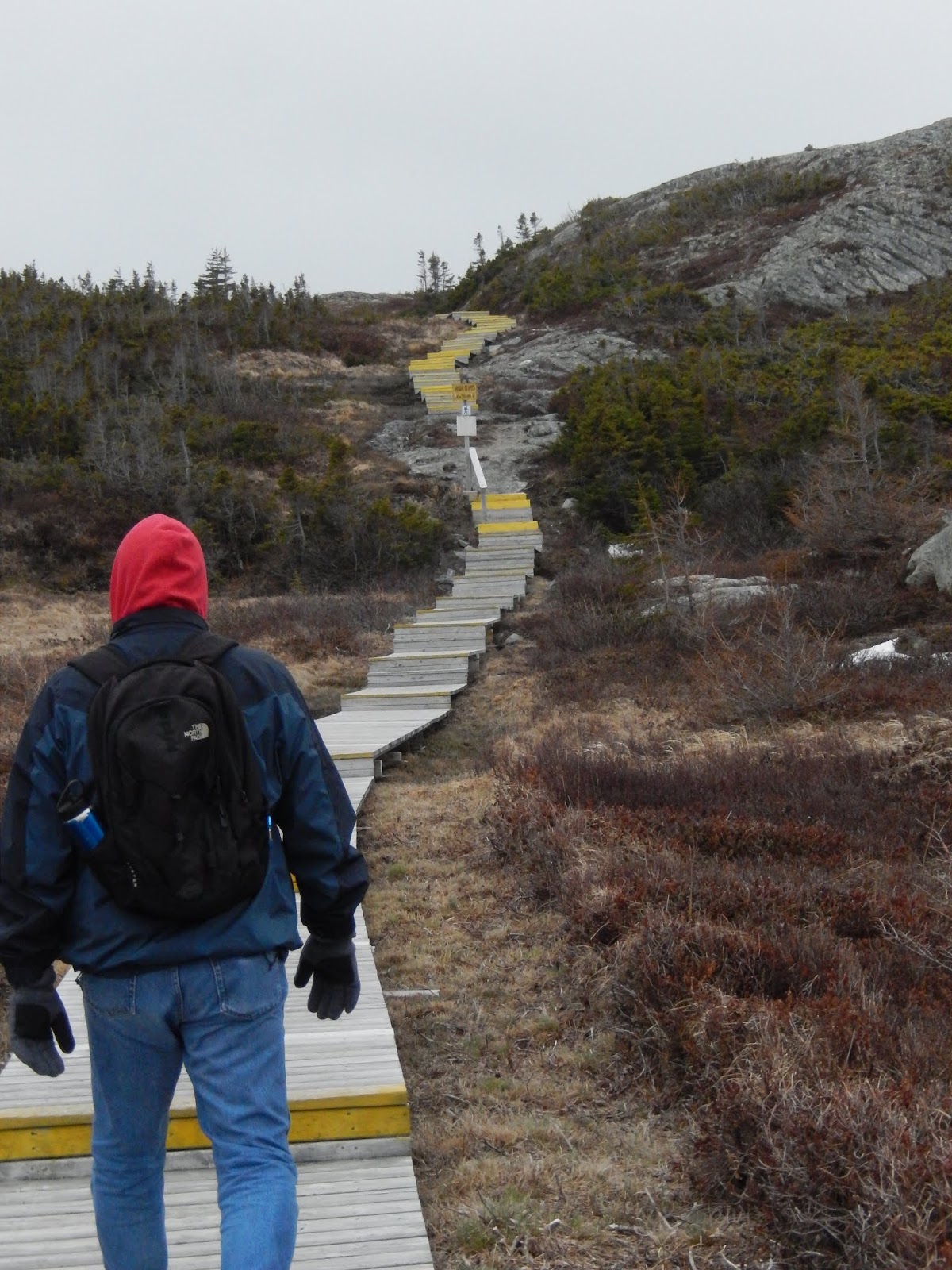
Drawn by the desire to see the end of the earth, or at least the end of the long land mass we'd been working our way up and across for a week, we tightened the draw strings on our hoods, grabbed our lunches and headed north following a path across the treeless landscape. The land, a big rock really, was covered with a thin layer of soil allowing the hardy ground-covering heather to grow in a lush variety of autumny colors from deep green to orange to rust. We came to the top of one rise and, expecting to be at the tip of the point, instead found more point stretching out in front of us.
"Should we continue?" my husband asked as we stopped, disappointed we weren't there yet after walking hard against the headwind.
"Why not? We've come all this way already. It'd be a shame to stop this short of the end." But also, I didn't want to eat lunch in the car.
 |
| White Point harbor. |
 |
| Over hill and dale... |
 |
| ...until we could go no further. |
We reached land's end and my husband wisely picked out two spots where we could sit behind large boulders to block the wind. Even still, I was worried that the tuna salad might be blown out of my sandwich and back into the waves from whence it came. About twenty feet below us the sea angrily hit the shore as if surprised to find it there.
As tough as this point was to survive this daily elemental onslaught, it was charming to see that the rocks were actually pink granite intersected by sparkly quartz stripes. Barbie would have definitely chosen these materials for her townhouse kitchen remodel.
We finished lunch, sitting mesmerized by the waves a good bit longer, and finally, reluctantly picked ourselves up and headed back to the car. Our drive then continued to Neil's Harbour, another fishing village nearby, where we decided to turn around and return to our base in Cheticamp.
Before I continue, a bit of background: In keeping with our vow to make this domestic assignment as adventurous as being overseas - we're exploring new territory close(ish) to home. This trip started with a short flight to Boston and a rental car pointed north across a bit of New Hampshire, a lot of Maine, along the New Brunswick coast and finally across to Nova Scotia. Two weeks and 2500 miles, the majority of which were navigated without the benefit of technology because, quite frankly, we're cheap and didn't want to pay the extra daily charge to use our cell phones in Canada. With guide books from the library and maps from just about every roadside visitors' center we passed - we "Lewis and Clark'd" our way from the border crossing between Calais, Maine and St. Stephen, New Brunswick where we turned the phones off.
While we'd been to Quebec and Montreal ten years ago, we had no experience in either Maine or the Canadian Maritime provinces. Which means we also had no experience with a little specialty of the area - the black fly. I first read about this pest in Bill Bryson's "A Walk in the Woods" where he wrote of them being a bother at the end of his trip along the Appalachian Trail. Had Mr. Bryson been a bit more explicit in his descriptions of what are essentially tiny, flying bed bugs, or had I paid more attention to the numerous roadside advertisements for shops selling "head nets" - I may have applied a bit of bug spray to my unprotected jugular before stepping out of the car at the first scenic viewpoint of Maine's interior. At first glance, they looked like something between a fruit fly and a gnat, and swarmed annoyingly in front of my face and flew into the frame of my photos, but I didn't think any more of them than that. Ten minutes down the country highway, we pulled off for lunch alongside a quiet, shady stream and I noticed them again. We were chatting with a Canadian couple who were heading the opposite way, sharing travel suggestions while naively swatting at the small swarm that had suddenly descended upon us from the depths of the thick, Maine woods. It wasn't until I wiped away a half-dozen of the little vampires from my husband's neck and saw the small streams of blood and growing welts they left on his exposed flesh that I realized I'd greatly underestimated their true, evil nature. By that time, it was also too late for my own exposed flesh. That same second, the other couple noticed them as well and exclaimed, "Black flies!" They quickly made their goodbyes and shot off for their RV. Shoving our lunch supplies into the cooler, we bolted for our own car, diving inside and slamming shut the doors while madly smashing all intruders who were fast enough to follow us into the sanctity of the closed vehicle. Each victorious swat left a smear of blood (our blood!) on the windows and dashboard. And just like that, the optimistic conversation we'd had that morning about what a gem Maine might be as a retirement destination were dashed and smeared into the rental car's upholstery like the flies themselves. The little bastards!
 |
| Broad horizons east of Bangor, Maine |
 |
| Hilltop cemetery covered in creeping phlox |
 |
| Site of the Zombie Attack of the Black Flies |
 |
| Hillside of Maine heather |
A short drive after the blood-bath, we crossed the border into New Brunswick, Canada. From there, it was a few hours' drive to the pretty harbor side city of Saint John (not St. John's - which is in Newfoundland - crazy for us to get those two mixed up, eh?) where we got our first view of the Bay of Fundy that separates New Brunswick from the bulk of Nova Scotia. For most of our trip, we had booked our accommodation well in advance, but for the driving days between destinations, we left our night's stay up to what struck us as interesting. On a whim, we decided to leave the Inter-Canadian highway and head south, through the Bay of Fundy National Park to what would be the first of many lovely fishing villages, Alma. Yes, yes, I too can hear the echoes of every guidebook about Greece or the Cinque Terre full of coastlines "dotted with tiny fishing villages" - but when it comes to the Canadian Maritime provinces - it's for real. It's not, as my Dad would say, ersatz.
We pulled into Alma on a Thursday night off-season and were happy to find a few hotels open to choose from. The one we picked had balconies with unobstructed views of the Bay of Fundy and the town's small, but essential harbor. More interesting than just that, Alma also offered us front-row seats to observe the highest tides in the world. Which, I learned, means the largest difference in height between the high and low tides, in this case a 50 foot difference over a six-hour period between tides. When we'd arrived, the lobster boats tied to the docks required a ladder to step down onto them. When I awoke pre-dawn and peeked out at the harbor, the boats were resting on their hulls on the muddy bay floor. To keep them from keeling over, they rested on a crate on one side, and leaned against next boat or the dock to the other side. By the time we got up to start the day, the boats were floating level with the docks, having already made their morning rounds to set the lobster pots in the Bay. As we checked out, I asked the hotel manager what happens when a fisherman needs to get his boat out at low tide, but it's in the middle of the domino chain with others leaning against it? He politely didn't point out the flaw in my logic (he ain't going anywhere at low tide, lady!) and humored me with an answer:
"Well you just call your friends to come down and move their boats first."
Not satisfied with this response that just begged more questions to my city-brain sensibilities:
"But what if it's in the middle of dinner? What if you're tired and don't want to drive back down to the harbor? Or what if you're away on vacation?" To which he just laughed and assured me, "We all live right here; we all work together - really, it's not a problem."
 |
| Saint John church |
 |
| The tide at "half mast," shall we say? |
 |
| Lobstermen returning to Alma for the evening. |
 |
| So they don't keel over twice a day at low tide, each boat has a crate stuck under one side and leans against either the dock or another boat while resting on the bay floor. |
The next day took us north along the Bay of Fundy, across the narrow land bridge from New Brunswick and into Nova Scotia. It was a dreary morning, raining steadily as we made the five hour drive to the south coast of Nova Scotia. By the time we found Black Point, the "village" that would be our base for the next few days, it had cleared and we were welcomed with sunny skies at the colorful waterside cottage we'd rented on St. Margaret's Bay.
 |
| Our rented cottage, and yes, those are tulips blooming on Memorial Day! |
 |
| Stretch of coast across from our cottage on St. Margaret's Bay |
 |
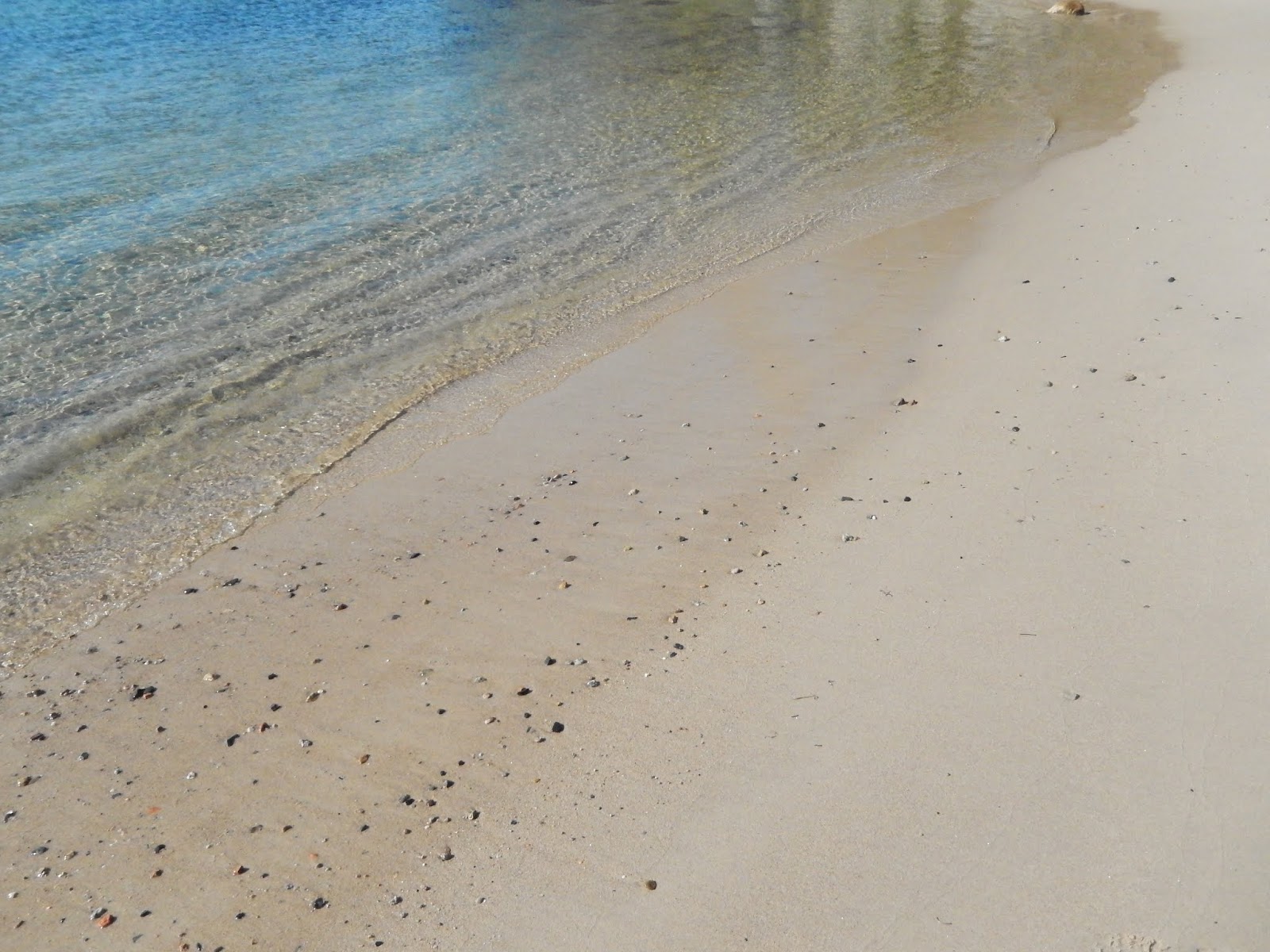
| Caribbean clear, but Canadian COLD water |
The southern shore of Nova Scotia has most of the popular tourist destinations: Halifax (which surprised us with a massive cruise ship in the harbor); Lunenburg - an UNESCO heritage town; the town of Peggy's Cove with one of the most photographed lighthouses in the world, and a long scalloped coastline of bays and points with hundreds of fishing villages. Visiting in late May meant we were arriving off-season still, giving us nearly empty highways, walks and beaches almost to ourselves and a better idea of what regular life is like when not flooded with tourists.
One such glimpse came on our first night when, at the suggestion of our hosts, we drove a short way down the road to the Shore Club in the town of Hubbards. An institution for generations, the Shore Club refers to itself as "last of the great dance hall and home to the original lobster supper" as well as being THE local hangout for live music. Who could resist that? That particular evening was a fund raiser for the local radio station complete with free hors d'oeuvres, a long table full of donated crafts for their silent auction, and a line-up of favorite local bands to keep us going late into the night. It had the feeling of being at someone else's high school reunion; not in a fancy-dress-and-name-tag kind of way, but because it was clear that EVERYONE knew everyone and was just having a great time bopping from table to table to catch up. Truly a community affair of all ages and being there made me want to emigrate tomorrow and join in.
 |
| Date night at the Shore Club, Hubbards, NS |
During the next few days we set out in different directions, following the two-lane road from town to town, pulling off in places that caught our eye and eating in mom and pops restaurants to eavesdrop on conversations in Nova Scotian accents. The towns felt so authentic, even though tourism is clearly a cash cow for a few. The lobster pots stacked in the yard aren't just for show, and the guys going out to fish are all generations-deeply rooted to the towns painted on their boats' hulls. The simplicity of the boxy architecture is brightened by primary color paint, but even the houses painted black are beautiful against the gray granite, or clear blue water and stands of evergreens.
(However...during the nights, we were tormented by the black fly bites that were not fading as the days passed, but rather were merging into red, hot, swollen and torturously itchy cervical collars around our necks. We used two types of creams - antihistamine and steroidal - in the day and ice packs in the evening to bring some relief.)
 |
| One more photo of the most photographed lighthouse at Peggy's Cove. |
 |
| Oh those Canadians! |
 |
| Peggy's Cove harbor |
 |
| Typical boxy and practical, but colorful architecture of NS fishing towns |
 |
| Saga of the fisherman carved into a stone mural |
 |
| Three churches of Mahone Bay |
 |
| Black trimmings and even black houses common here. |
 |
| Harbor buildings of Lunenburg, UNESCO heritage site for its classic town layout |
The second half of our trip took us east across the length of Nova Scotia and over the bridge to Cape Breton Island. While the landscape didn't change too much (trees, trees and more trees), the flavor did. Town signs went from English only, to English and Gaelic. Following the Ceilidh Trail, we drove along the north shore of the island (An clada a tuath), drove through the towns of West Mabou (Mabu ar Iar) and Judique (Sludaig Mhor) with its Celtic Music Interpretive Center where my husband picked out a tin whistle for himself and a necklace for me with a celtic knot made of old guitar strings. We continued to Glenora, taking a tour of the Glenora Distillery, North America's first single-malt whisky distillery situated along MacLellan's Brook, touted as the "purest and cleanest source of water in Cape Breton". Distilling since 1990, it can now offer whiskys aged from 8 to 25 years. But with a long, winding road still ahead of us - we only sampled one batch and bought a small bottle for later.
 |
| Distillery and Inn. |
 |
| Learning the whisky distilling process. |
Then just a short ways up the road, the street signs and town names changed again- this time to French. No longer was it a recycling depot we passed, but a depot de recyclage. Street signs displayed both "CH" and "ST" should any confusion arise about whether or not this was Chemin Black Rock or Black Rock Street. The Acadian flag (a French flag emblazoned with a single, gold star) flew in front yards and family names on the mailboxes were now Aucoin and Michaud. Although officially we'd been in Acadia since Maine and New Brunswick (hence Acadia National Park in Bar Harbor, ME), our destination town of Cheticamp considered itself Cape Breton's Acadian heart.
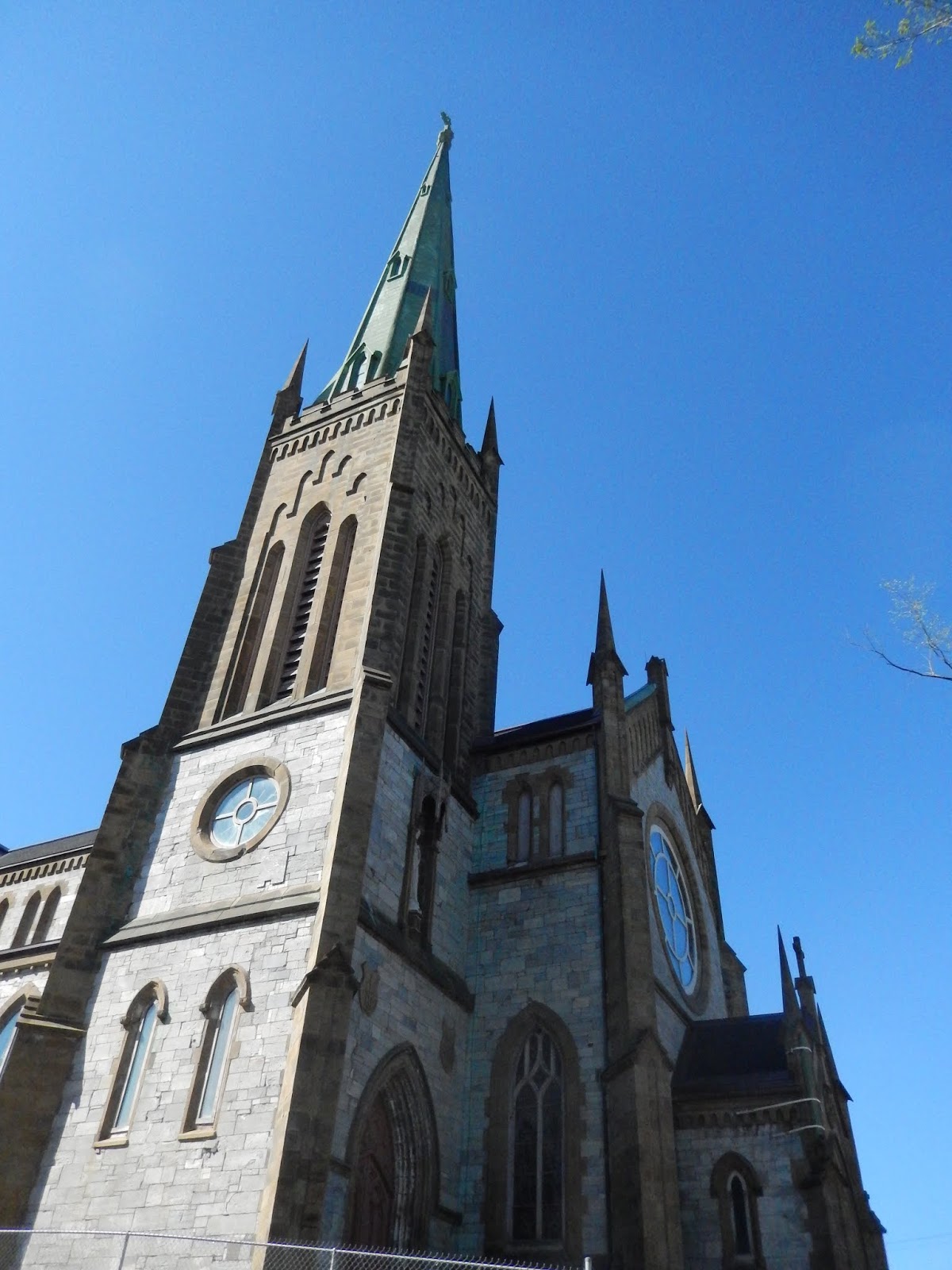
We arrived in Cheticamp late in the afternoon. Our host had warned us that coming off-season as we were - the prime tourist season doesn't kick into high gear until at least July - we should fill our tank and stock up on whatever wine or booze we wanted as soon as we could because business hours were prone to unexpectedly early closure this time of year. We pulled into the one-pump gas station/garage and stepping out of the car, heard the mechanics listening to the same radio station we'd tuned into on the drive up. It was CKJM, the francophone community radio station of Cheticamp. They greeted us in French and my husband conducted the transaction completely en francais, much to his pleasure. The main road that had brought us up the northeastern coast of Cape Breton Island turns into Cheticamp's main drag, but this is by no means an un cheval town. The town is many kilometers long, sandwiched between the Gulf of St. Lawrence and the mountains of the Cape Breton Highlands National Park. With a prominent stone church marking the start of the town on our right and a long harbor full of fishing boats to our left, and restaurants, inns and small businesses lining both sides - the town seemed to have all we needed, which was a relief given the distance to the next town.
 |
| Acadian-flag themed decorative lighthouse. |
 |
| Town skyline in late May with the trees only partially leafed out. |
 |
| See - I told you it was all French! |
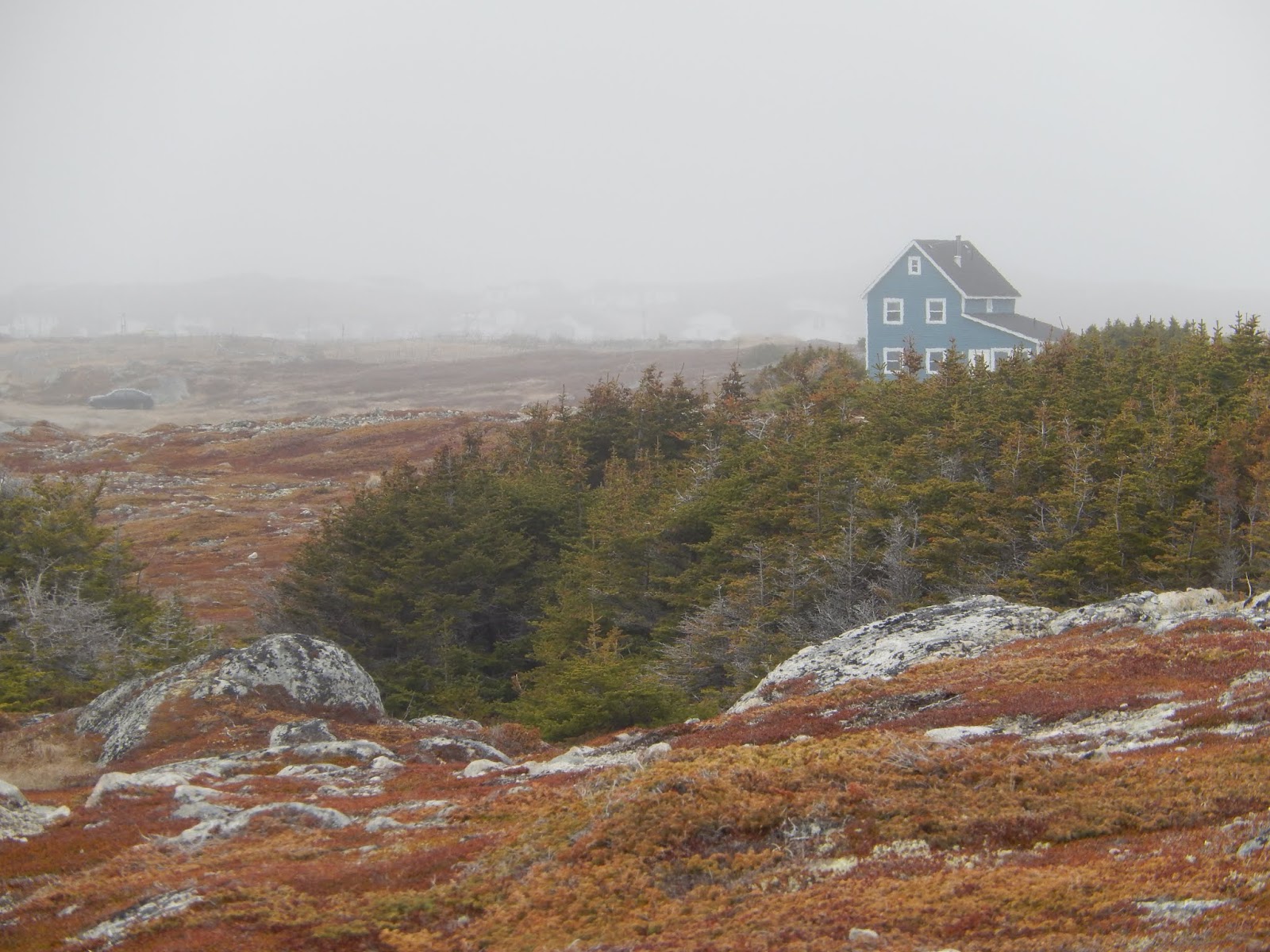
At the northern edge of town, we found our rented A-frame cottage set off the main road by a quarter-mile gravel drive and tucked into the edge of the evergreen and hardwood forest. The instructions for the cabin warned that "some guests have been concerned by the 160+ km per hour winds that frequently hit the town (les suetes), but don't worry, the cabin was built to withstand them." The large rocks holding down the Adirondack chairs on the front porch echoed this reality. Fortunately, we'd arrived under clear blue skies and were treated to a beautiful view of our surroundings that first evening, with sunset after 9:00 pm and a full moonrise over the mountains outside our loft bedroom window.
 |
| Our quirky, beautifully stylish cabin. |
 |
| This is my new motto. |
 |
| Colored votive holders in our cottage window. |

The next morning a blanket of fog socked us in, and so instead of planning outdoorsy activities, we stayed close by and got to know Cheticamp. It started with a visit to Les Trois Pignons Culture Center, just a few minutes' walk from our cottage. Not just a regional information hub, it also hosted a wonderful museum to Acadian history (which is far too long and convoluted for me to summarize here - but fascinating to hear nonetheless), and my favorite - the hooked rug museum. You read that right. Let's just say that after going through the museum, talking at great length to the women running the center and seeing just what can be accomplished with yarn, a hook and a piece of burlap - I was hooked and bought a few starter-sized kits. In their heavily-accented English ("Excuse us, it's just May and we're not used to speaking English again! We'll remember all the words by July."), we learned about life in Cape Breton through the ages. We heard stories of communal hooking- shall we say - where all the ladies from the town worked together to get so-and-so's rug made, ("We all know that if I help you for three days on your rug - you'll come help me with mine when it's time"), and learned that the best way to clean the rugs is by laying them on fresh, crisp snow banks to let the crystalline top layer draw out all the dirt. The conversations painted a picture of a traditional life, a rugged life, built by and reliant upon the tight knit of one's community. Throughout our visit, we saw this in action. From the community radio playing at every business we stepped into, to the evenings of Acadian music at the senior center where everyone got a turn to play or sing in the musical circle, to the fishing boats leaning on each other during low tide in the Bay of Fundy. It's a life not lead separate from your neighbors, and a living not made at a desk or a keyboard. It felt like a world away certainly from our DC lives, and even just our American lives.
 |
| Morning misty view of the town from Cheticamp Island just across the harbor. |
 |
| Fisherman's shack on Cheticamp Island. |
Our last night in Cheticamp, the evening after our picnic lunch on White Point that started my story, we ate at Restaurant Evangeline, opposite the harbor on the main street. Striking up a conversation with the matronly waitress, we were sad to hear that indeed the young people were leaving the town and only about a quarter stick around and continue with fishing, maybe a few more in other town businesses. She tempted us with two desserts from a long list (I had the butterscotch pie), all homemade in the pre-dawn hours by the octogenarian woman who lived upstairs. We joked about our longing for a quiet life like this, to which she laughed and told us that in fact, they needed two cooks. Under different circumstances, I'm fairly certain my husband would have shook her hand, asked where the apron was and when did they want him to start?
 |
| View from Restaurant Evangeline. Heading out to check the lobster pots at the day's end. |
 |
| Sunset on the glass |
 |
| A plus tarde Cheticamp! |
But for now - we're just passing through. Looking out over the harbor to the slowly sinking sun, I raised a glass to Nova Scotia and promised we'd be back.
Who knows when or for how long.
Let's just hope it's not in black fly season.
Little bastards.
 |
| And this was after nearly a week! |