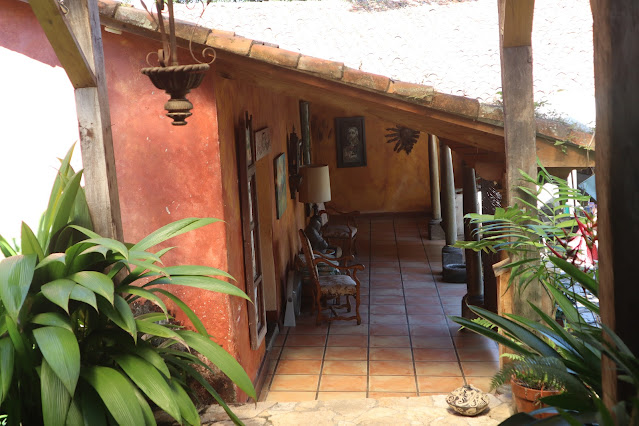
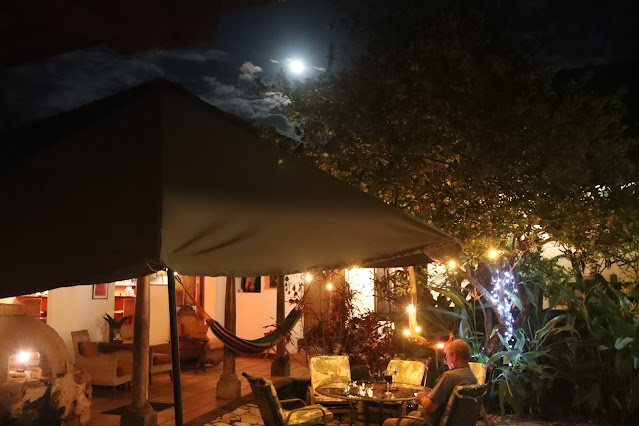
Dusk is short, it's dark by dinnertime and we have just a single votive and a small lamp on a post nearby to light the table. Whether January or July, the consistently pleasant weather here allows us to eat outside with the only consideration being the mosquito population. Tonight it's not too bad, despite being the middle of the rainy season. Tilting the menu to be best lit by the dim light, my husband and I make our selections and give our dinner orders to the young waiter at the hotel's restaurant, and then sit back to take in our surroundings. The dining areas are spread across two courtyards (one poolside and the other surrounding a central fountain), a more formal inside room, and the wooden rooftop balcony we've chosen overlooking it all and over the northern edge of the town. It's the 4th of July in Suchitoto, El Salvador. This year the American holiday falls on a Sunday, which means the Embassy is closed tomorrow and we'll have the day off. Whenever we have an American holiday on a Monday, and the rest of the country will carry on like usual, we head out for a Sunday overnight and generally find we have whichever town, hotel and restaurant to ourselves. Tonight would be no exception.
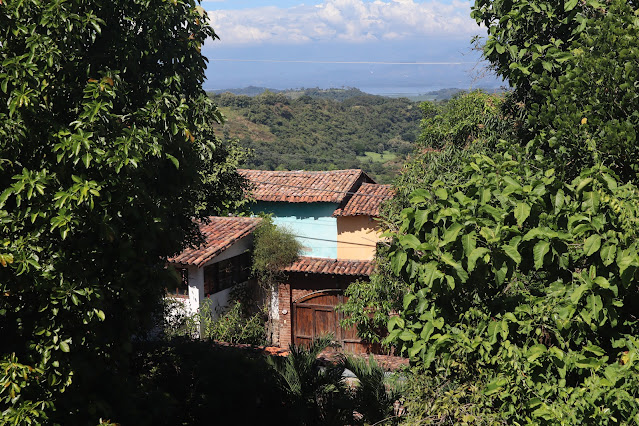 |
| The view north past Lake Suchitlan. |
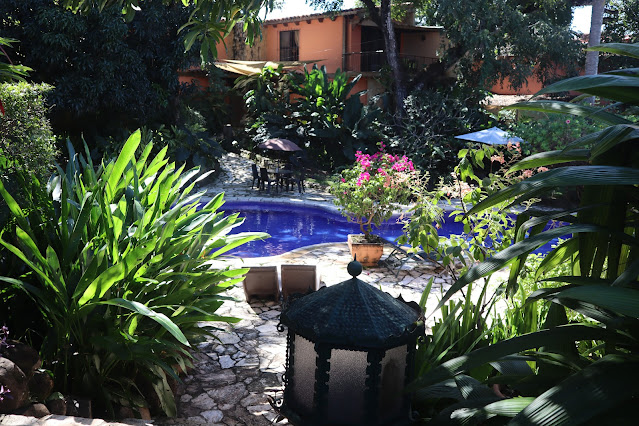 |
| Hotel Los Almendros de San Lorenzo. |
 |
| Beautifully restored interior courtyard. |
 |
|
Staying on a Sunday also means the hotel staff are less busy and more free to chat, and striking up conversations with strangers sits somewhere between an obsession and physical compulsion for me. This habit can make any introvert with me cringe, but I find it always leads to hearing interesting stories and gaining insight into the daily lives, political opinions and weather predictions from the regular folks living where we're visiting. Again - tonight would be no exception. Our waiter tells us he's studying to be a teacher, physical education if I recall correctly, and wakes up in the wee morning hours (like 3:00 am) to take a multiple-hour bus trip to the main university in San Salvador from Suchitoto. Or I should say, he takes buses plural as the trip requires multiple transfers. But he says the commute is worth it as he can live at home and keep this good job at this hotel, the lovely Los Almendros de San Lorenzo. He'll finish his degree soon and start looking for teaching jobs, but he isn't optimistic that there will be enough to go around for himself and his classmates. And anything in a school near his home would be even less likely. He'll have to think hard about whether or not he'd take a job out of commuting distance from home and doesn't really have another plan for this eventuality other than to hope that he finds a good placement. We try to end the conversation on a hopeful note for his career prospects, but sadly expect to find him still waiting tables on our next visit.
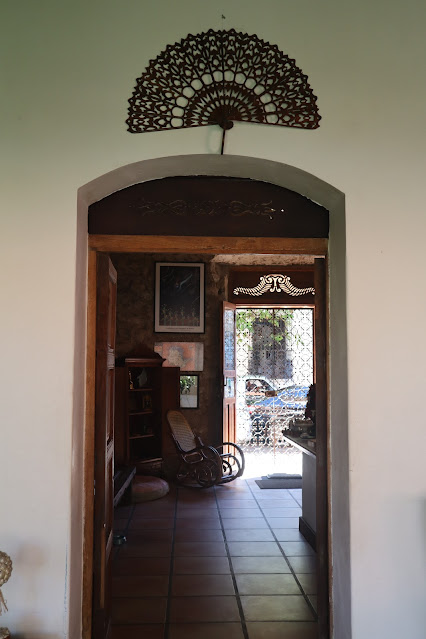 |
| Hotel reception. |
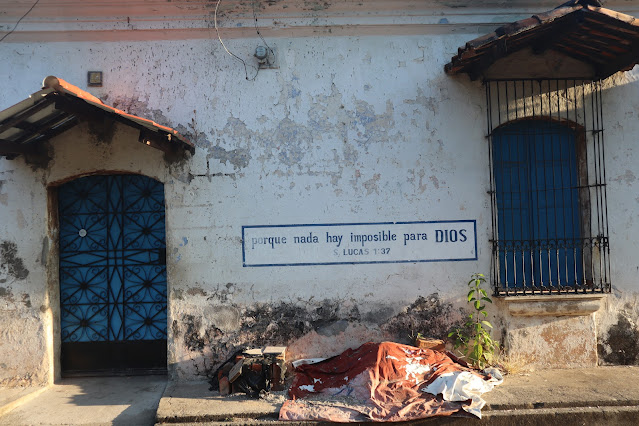
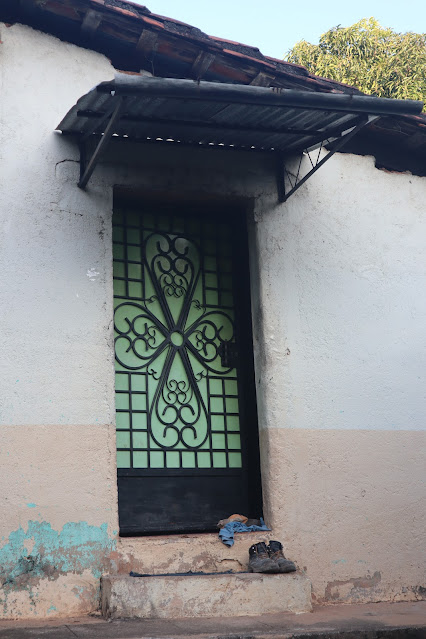
After dinner, we leave the hotel's interior courtyard through tall, carved wooden doors set into two-foot thick adobe walls and exit onto a cobbled lane not far from the town plaza. Suchitoto feels as if it's perched on a plateau given its purview over the expansive Lake Suchitlan below, but the town actually sits at half the altitude of San Salvador where we live. A strategic stronghold in all sorts of wars over the centuries, the town's historic significance has been the motivation to preserve its original architecture, church, cobbled streets and rows of pastel adobe houses. Quaint, yes, but not in a Disney way. It has preserved and emphasized its cultural heritage well and the community supports multiple museums, arts centers and an historic theater. But beyond that, Suchitoto is a real town that doesn't depend only on tourism to survive. It is populated by all income and education levels, and with enough grit to feel authentic, yet not too much to feel unsafe walking around after dark. And so we did.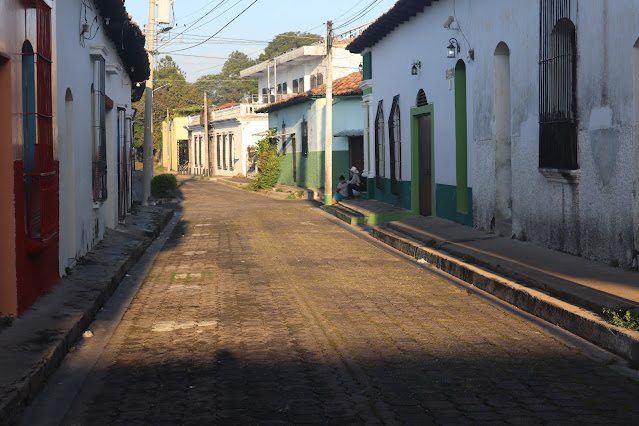 |
| Suchitoto streets are lined with classic adobe houses with arched doorways and shuttered windows. |
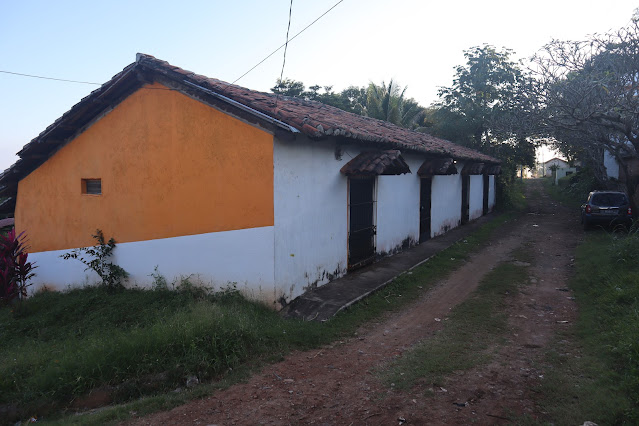 |
| Row houses from tradtional to formal. |
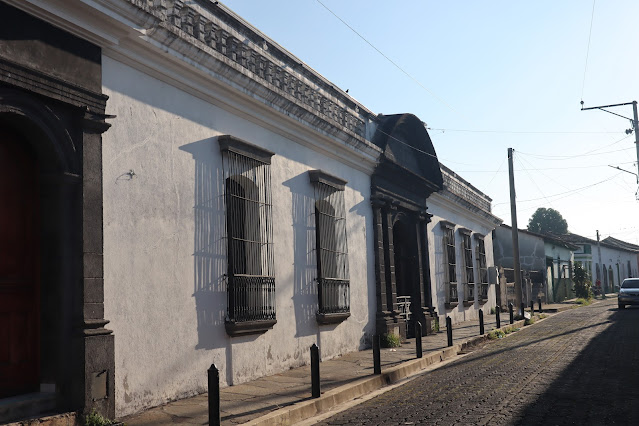
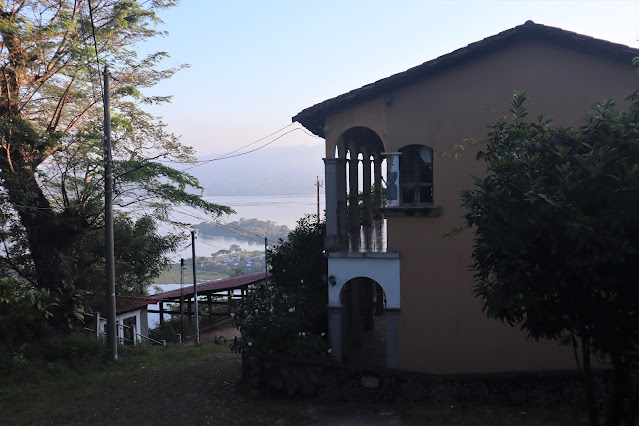 |
View over Lake Suchitlan. |
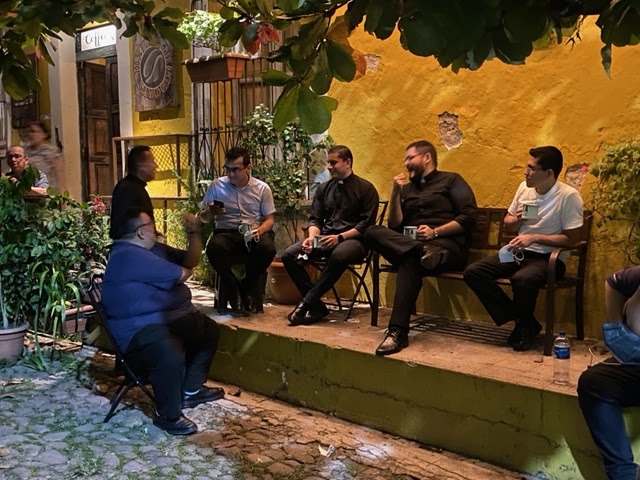
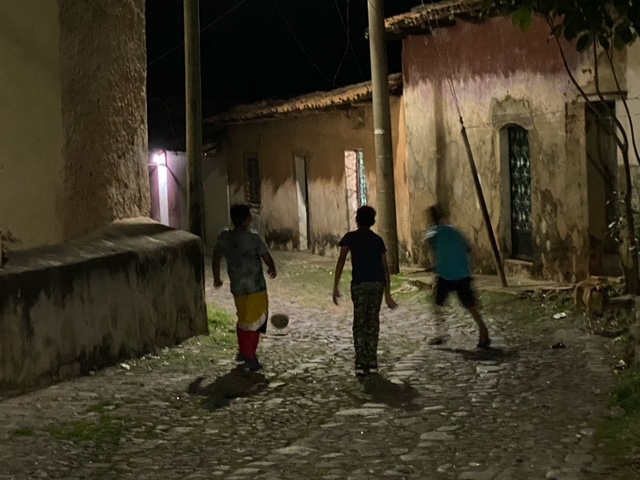
What fascinates me about walking after dark in a warm climate is that I can witness so much life in the house doorways and front living rooms where windows and doors are left wide open to keep the breeze coming in. I learned this on a trip to Merida, Mexico where looking into every front room while strolling by on the sidewalk started as a curiosity and turned into a compulsion. My husband and I have discussed, to no final conclusion, whether or not there are unspoken rules about this. On the one hand, this rubber-necking could be an intrusion into the privacy of the people minding their own business in their underwear in the own homes. On the other hand, they did leave the doors and windows wide open - what did they expect? I waver between the two opinions, and in the end find myself unable to stop the quick glances. It goes back to my conversation urge - I just learn so much about how folks live by seeing them in their natural habitats, as it were. A weeknight in a tourist town, or during the off-season when few visitors are about, lets residents regain possession over their streets. Neighbors hang out on front stoops chambreando, watching the kids and dogs play outside and generally letting their hair down after the work day. Women sit on stools and snap peas, a cat or older dog at their feet, and keep an eye on who and what is passing by. There's usually a TV on in the front room, its watcher swinging silently in a hammock strung up corner to corner by heavy hooks sunk into the plaster walls. Family photos hang above the camelback sofas, themselves covered by crocheted throws. A few framed pictures proclaiming a favorite team, celebrating a recent graduation or stating a religious conviction decorate other walls. Three boys kick a soccer ball under a weak street light and the smell of dinner drifts out onto the street.

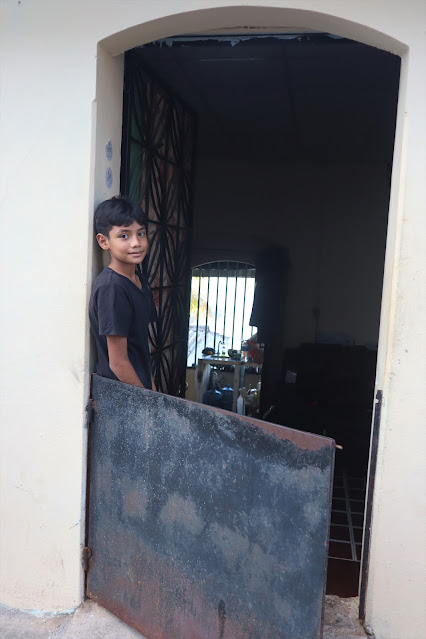
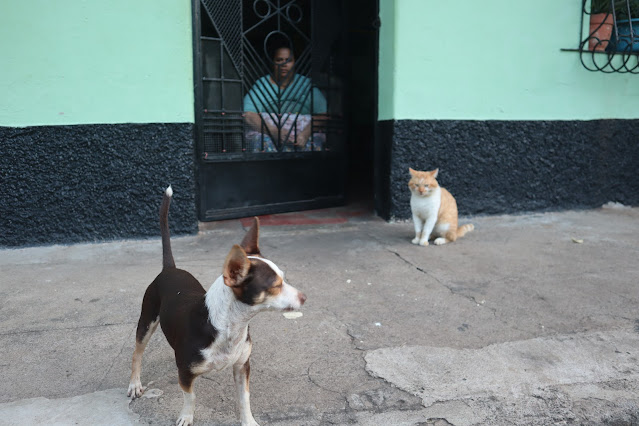
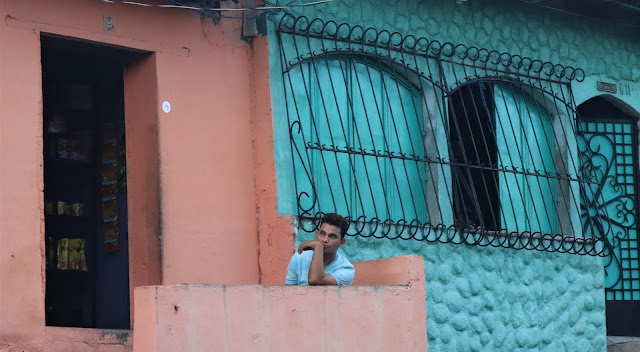
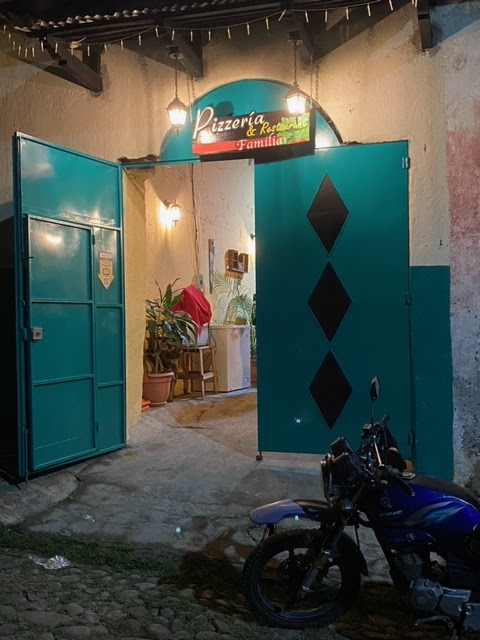
We step off the curb and into the street to pass a cluster of people in front of a small restaurant. The owners keep the doors open after closing time because in all likliehood they live just above or in the back, so it's no problem to hang out a bit longer. A waitress wearing a short, frilly apron over her jeans leans against the doorway and the kitchen staff have joined a group for a few drinks and lively conversation after their shifts. Two teenagers are entwined into each others' arms on a bench in the shadows just out of sight of parents or aunties. The heat of the day has passed; it's time to relax and just sit outside, catch up with neighbors and get ready to do it all again tomorrow.
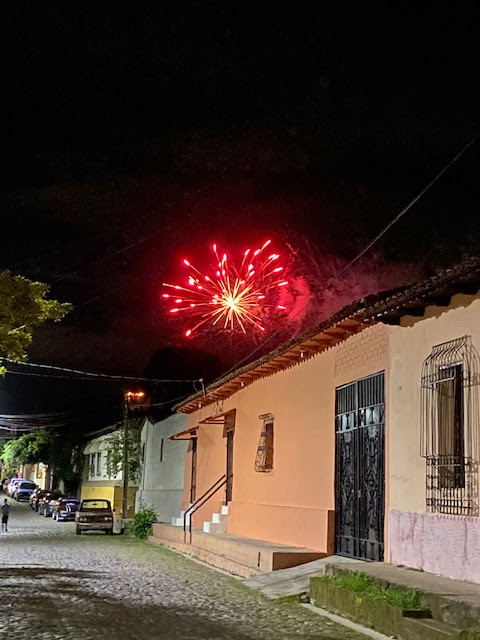
We continue to walk without a particular destination, just following the sidewalk, when we're startled by a burst of fireworks above the roofline coming from the plaza in front of the church. My husband and I stop in the street - there are no cars driving about to watch out for - and enjoy the show, wondering who knew it was the 4th of July? We find some likely culprits among a gathering of men at a sidewalk cafe near the church. I imagine some are Salvadorans come back home to visit from Houston or Silver Springs, treating their friends to a fireworks display for the American holiday. The cardboard debris from the fireworks still sits in the plaza where they were lit, left for the street sweeper woman to deal with tomorrow. She won't mind; she knows it's just how things are done.

Seeing small towns like Suchitoto when they're not "on display" for visitors lets me experience the authentic place. Walking after dark or early in the morning can feel a bit like peeking through the curtains and seeing the town in its undershirt, before it has smartened up for company. It's the best way to get to know the routines and repeating rhythms of how daily life passes and appreciate places and people more honestly. So I think I'll keep doing it.